
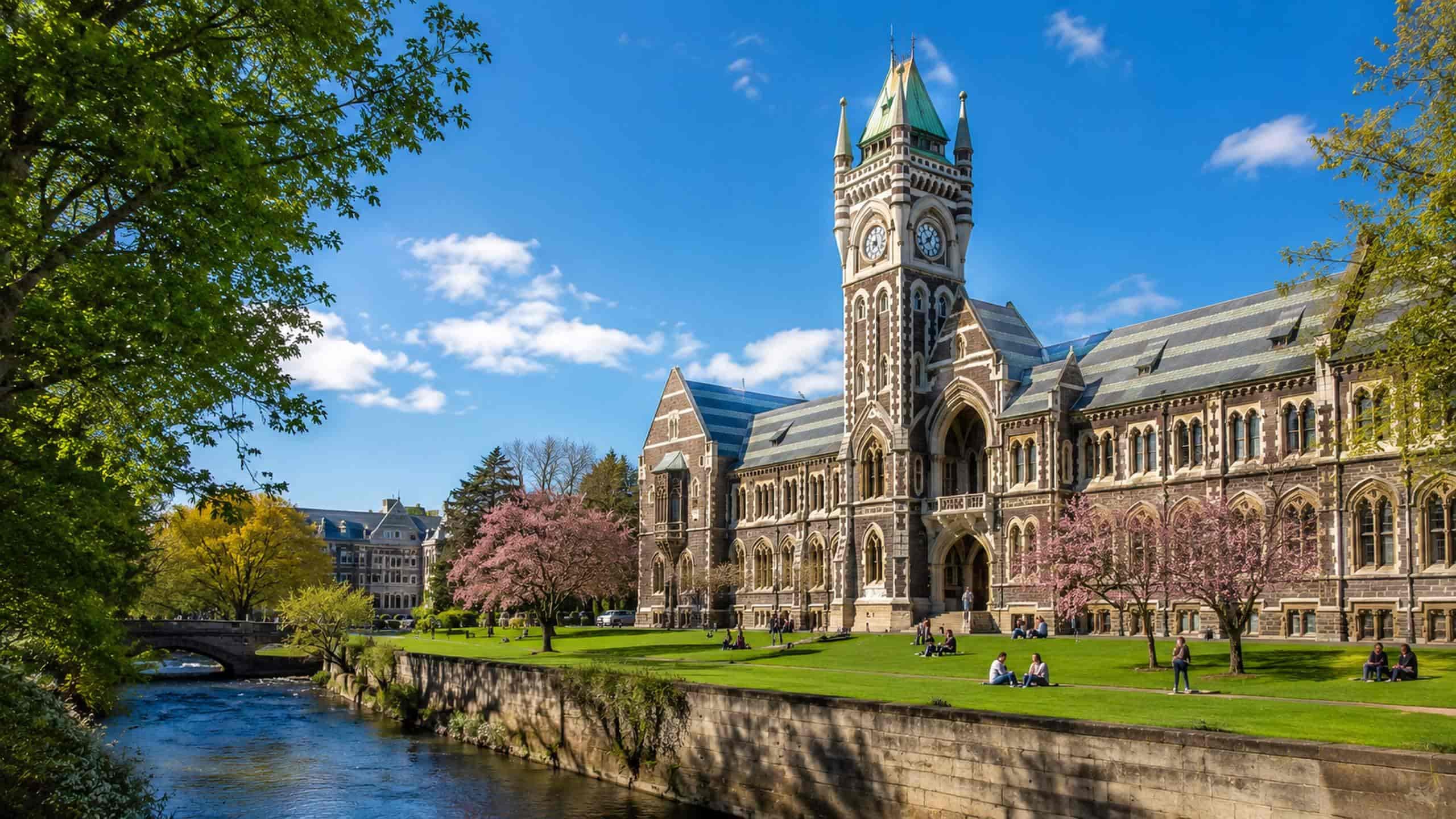
Bachelors & Masters Degrees at Top New Zealand Universities
Globally ranked universities and a genuine settlement pathway in one of the world's safest countries.
- Bachelors & MastersPrograms Available
- All 8 UniversitiesQS World Ranked
- Safe & LiveableStudent Environment
- Residency PathwayAfter Graduation
Start Your Journey Today
Get free expert guidance for studying in New Zealand.
Why Study in New Zealand?
- All eight universities are QS world ranked
- Post-study work visa of up to 3 years
- Qualification screening waived for Indian degrees
We Simplify Your Journey
- Counselling
- University Selection
- Application Support
- Visa Guidance
- Pre-Departure Assistance
End-to-End Support
Every step. Expertly handled. Focus on your future, we'll take care of the rest.
Quality Education in One of the World's Most Liveable Countries
New Zealand offers a high quality of life, world-class universities, and a straightforward immigration system — all in a country consistently ranked among the safest and most liveable on earth. All eight of New Zealand's universities appear in the QS global rankings, and a post-study work visa of up to 3 years lets graduates build local experience toward permanent residency. Crucially, from June 2026, Indian degree holders no longer require qualification screening when applying for visas — a significant boost for Indian students.
Who is this for?
A great option for students who value a balanced lifestyle, safe environment, and a genuine pathway to settlement. Particularly suited to those in agriculture, environmental science, IT, nursing, and business — fields where New Zealand has ongoing skill shortages.
Study Options in New Zealand
Popular Programs
Top Universities
The Student Roadmap — Step by Step
From your first application to your career abroad — here is the full timeline you can expect.
Profile Assessment
Explore- Academic background
- Study gaps & previous education
- English proficiency
- Career goals
- Course eligibility
Course & Provider Selection
Explore- Course matching
- University / Polytechnic / PTE options
- Programme level & duration
- Intake planning
- Entry requirements
Application Preparation
Apply- Academic documents
- Passport
- English test results
- CV / work experience (if applicable)
- Supporting documents
Application Submission
Apply- Apply to selected institutions
- Track application status
- Respond to additional requirements
- Receive admission outcome
Offer of Place
Apply- Receive your Offer of Place
- Review course & provider details
- Check conditions
- Complete pending requirements
Financial Readiness
Prepare- Tuition fee planning
- Living-cost funds (NZD 20,000 per year as per INZ)
- Sponsor / guarantor assessment
- Bank statements & source of funds
- Education loan (if applicable)
Genuine Study Assessment
Prepare- Why New Zealand?
- Why this course & institution?
- Previous education
- Career plans after study
- Financial circumstances
- Evidence supporting your study plan
Tuition, Insurance & Enrolment
Prepare- Pay tuition fees / arrange approved payment pathway
- Confirm acceptable insurance
- Finalise enrolment
- Receive required enrolment documentation
Visa Documentation
Visa- Passport & photographs
- Offer of Place
- Tuition fee evidence
- Financial evidence
- Health documents
- Police certificate (required upfront in 2026)
- Travel / onward-travel evidence
Online Visa Application
Visa- Create / access Immigration Online
- Complete the student visa application
- Upload documents
- Pay visa fee
- Submit application
Visa Processing
Visa- Monitor application
- Respond to INZ requests
- Provide additional information if required
- Track application updates
- Apply around 3 months before travel — processing may take at least 8 weeks
Visa Decision & Pre-Departure
Visa- Receive visa decision
- Confirm travel plans
- Accommodation arrangements
- Pre-departure preparation
- Outcome: Ready to begin your New Zealand journey
Approximate Annual Cost in New Zealand
Tuition Fees
NZD 35,000–50,000 per year (UG); NZD 40,000–59,000 per year (PG); medicine/veterinary science NZD 55,000–80,000
Living Costs
NZD 15,000–22,000 per year (varies by city — Auckland is most expensive)
Visa & Application Fees
NZD 375 (Student Visa fee) + NZD 450 (if applying outside New Zealand)
Total annual investment: NZD 50,000–72,000 (approx. ₹25–36 lakh). New Zealand is smaller than Australia and the UK but offers a more personalised study experience with smaller class sizes.
How to Apply — What You Need to Know
Click each section to expand the full details on language requirements, documents, visa pitfalls, and the right time to apply.
- IELTS Academic: Overall 6.0–6.5 for most undergraduate programs; 6.5–7.0 for postgraduate and health programs.
- TOEFL iBT: 79–90+ for most universities.
- PTE Academic: 58–65 for most programs.
- Cambridge English: B2 First (FCE) or above accepted at some institutions.
- Pre-university English pathway programs available at most universities for borderline scores.
Work While You Study in New Zealand
During Term
25 hours per week during term time
During Holidays
Full-time during scheduled semester breaks
Estimated Earnings
NZD 900–1,500/month part-time (minimum wage NZD 23.15/hour, 2025)
Your Career After Graduating in New Zealand
Post-Study Work Visa
Post-Study Work Visa (PSWV) — up to 3 years for Level 7 (Bachelor's) and above qualifications studied in New Zealand. Open work permission; any employer and location.
Permanent Residence
Skilled Migrant Category (SMC) Residence Visa — requires a skilled job offer, NZ qualification, and points-based assessment. Nursing, IT, engineering, and agriculture are on the Green List (fast-track PR with job offer). Skilled Green List occupations can apply for PR directly from offshore.
Average Graduate Salary
NZD 55,000–80,000/year for STEM and health graduates; nursing and engineering command premium salaries due to skill shortages.