Bachelors & Masters Degrees at Top Irish Universities
Study in Europe's English-speaking tech hub, home to Google, Meta and Apple headquarters.
- Bachelors & MastersPrograms Available
- English-MediumEU Education
- Global Tech & PharmaEuropean HQs
- 2-Year Stay BackFor Masters Graduates
Start Your Journey Today
Get free expert guidance for studying in Ireland.
Why Study in Ireland?
- European HQs of Google, Meta, Apple & Pfizer
- Two-year stay-back visa for Masters graduates
- English-medium study with no language barrier
We Simplify Your Journey
- Counselling
- University Selection
- Application Support
- Visa Guidance
- Pre-Departure Assistance
End-to-End Support
Every step. Expertly handled. Focus on your future, we'll take care of the rest.
Europe's English-Speaking Tech Hub
Ireland has quietly become one of Europe's most sought-after study destinations. Home to the European headquarters of Google, Meta, Apple, LinkedIn, and Twitter, Ireland offers unparalleled proximity to global tech and pharma industries. English-medium instruction, a 2-year post-study work visa for Masters graduates, and a welcoming immigration system make it particularly attractive for students in technology, business, and healthcare who want to work in multinational companies without a language barrier.
Who is this for?
Ideal for students targeting careers in tech, pharma, financial services, or data analytics who want to work in a major tech hub right after graduation. Ireland is a smart choice for those who want the benefits of European education without needing to learn a new language.
Study Options in Ireland
Popular Programs
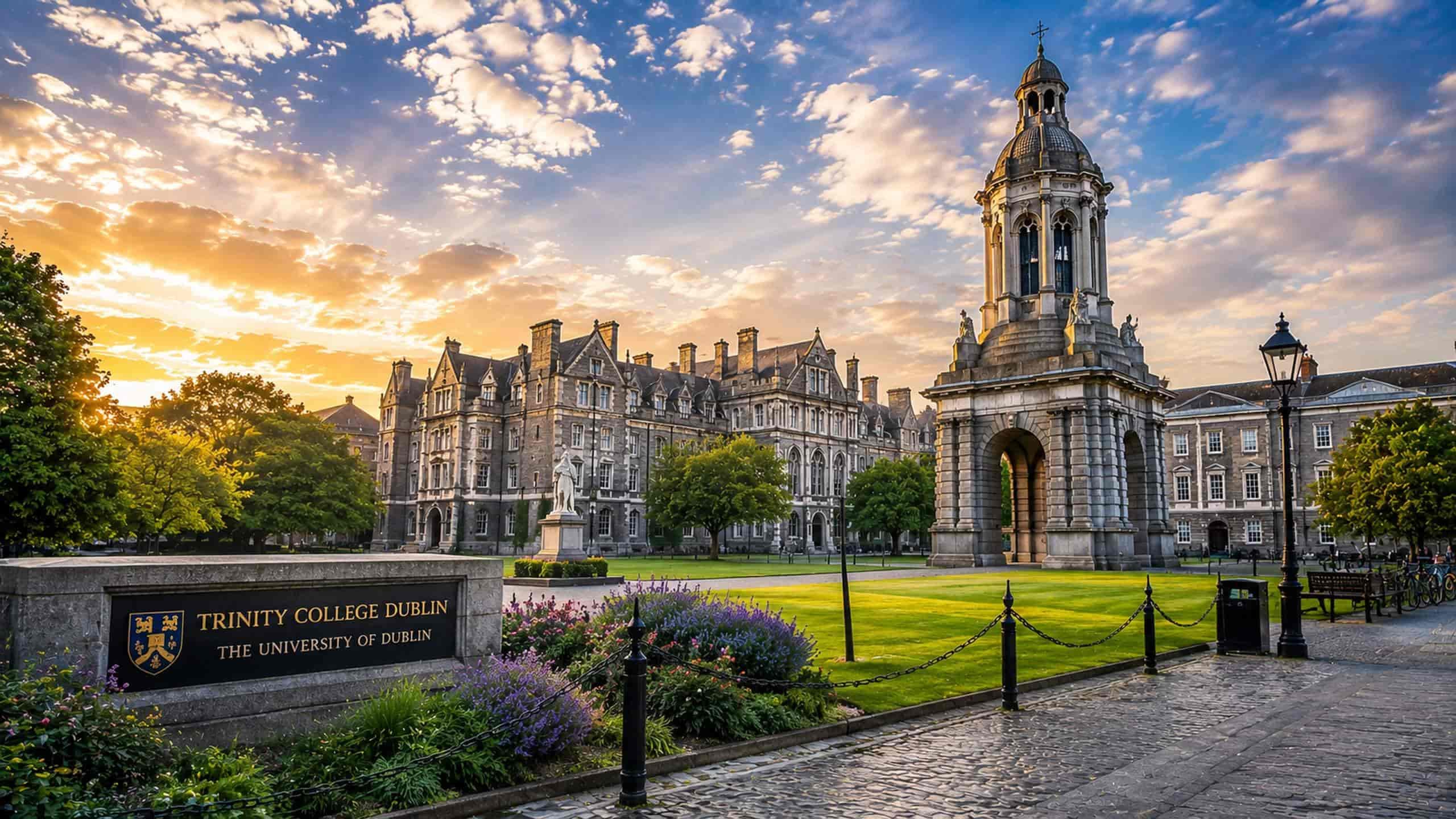
Top Universities
The Student Roadmap — Step by Step
From your first application to your career abroad — here is the full timeline you can expect.
Profile Evaluation & Career Counselling
12–18 Months Before Intake- Free 1:1 counselling session
- Profile assessment (academics, backlogs, gaps, work exp.)
- Course & career mapping
- University shortlisting & budget planning
- Scholarship eligibility check & intake selection (Sept / Jan)
English Language Proficiency
10–14 Months Before Intake- IELTS / PTE / TOEFL preparation
- MOI guidance where accepted
- Test registration & score improvement support
- Recommended: IELTS 6.0–6.5+ | PTE 58–63+ | TOEFL iBT 79–90+
University Applications
8–12 Months Before Intake- University shortlisting & documentation review
- SOP & Resume / CV preparation
- LOR guidance
- Application submission & fee guidance
- Follow-up with universities
Offer Letter & Acceptance
6–10 Months Before Intake- Receive Conditional / Unconditional offer
- Accept the offer & meet pending conditions
- Pay tuition deposit
- Obtain Confirmation of Acceptance documents
Financial Planning
4–8 Months Before Intake- Education loan assistance
- Financial documentation & tuition fee payment
- Scholarship guidance
- Proof of funds preparation & forex guidance
Student Visa Application
3–5 Months Before Intake- Ireland Long Stay (D) Student Visa application
- Visa documentation & financial evidence review
- Visa application submission & biometrics (if required)
- Visa interview guidance (if requested)
- Visa tracking until approval
Accommodation & Pre-Departure
1–3 Months Before Departure- Student accommodation booking
- Airport pickup assistance & travel insurance
- Flight booking support
- Forex card & international SIM guidance
- Packing checklist & pre-departure orientation
Arrive in Ireland
After Landing- Airport arrival & accommodation check-in
- Open an Irish bank account
- Obtain PPS Number (if eligible)
- Register with Immigration (IRP)
- University orientation & public transport guidance
Study & Work
Throughout Your Course- Work up to 20 hours/week during academic sessions
- Work up to 40 hours/week during official holidays
- Internship & placement support
- Career development workshops
- CV building, LinkedIn optimisation & employment guidance
Graduate & Stay Back
- Bachelor's: Third Level Graduate Programme, stay back up to 1 year
- Master's: Third Level Graduate Programme, stay back up to 2 years
- Seek employment during stay-back period
Build Your Career in Ireland
- Secure full-time employment
- Gain international work experience
- Employer sponsorship opportunities (where eligible)
- Explore Critical Skills Employment Permit pathways
- Long-term residence options for eligible professionals
Approximate Annual Cost in Ireland
Tuition Fees
€11,000–€28,000 per year (€15,000–€22,000 average for most programs)
Living Costs
€10,000–€17,000 per year (Dublin is more expensive; Galway, Cork more affordable)
Visa & Application Fees
€60 (Long Stay D Study Visa fee) + €300 IRP registration fee in Ireland
The Government of Ireland International Education Scholarship (GOI-IES) provides €10,000 + full tuition waiver for 1 year — highly competitive but worth applying. Trinity and UCD also offer Global Excellence Scholarships.
How to Apply — What You Need to Know
Click each section to expand the full details on language requirements, documents, visa pitfalls, and the right time to apply.
- IELTS Academic: Overall 6.0–6.5 (most programs); 6.5–7.0 for nursing, medicine, and postgraduate research.
- TOEFL iBT: 79–90+ depending on program.
- PTE Academic: 58–65+ for most courses.
- Some institutions accept Duolingo English Test (score 110+).
- Pre-sessional English programs available at UCD, TCD for borderline scores.
Work While You Study in Ireland
During Term
20 hours per week during term time
During Holidays
40 hours per week from June–September and December 15–January 15
Estimated Earnings
€900–€1,500/month part-time (national minimum wage €13.50/hour in Ireland, 2025)
Your Career After Graduating in Ireland
Post-Study Work Visa
Degree Programme (DSGP) Stay Back Option — 12 months for ordinary degree (Level 8), 24 months for Master's (Level 9) and PhD (Level 10). Open permission to work full-time for any employer during this period.
Permanent Residence
After post-study work, apply for Critical Skills Employment Permit (salary threshold €38,000–€64,000 depending on sector) or General Employment Permit. PR (Stamp 4) eligibility after 5 years of legal residence including study and work. Irish citizenship possible after 5 years of PR.
Average Graduate Salary
€40,000–€65,000/year for tech and pharma graduates in Dublin; 15–25% higher than other Irish cities.